

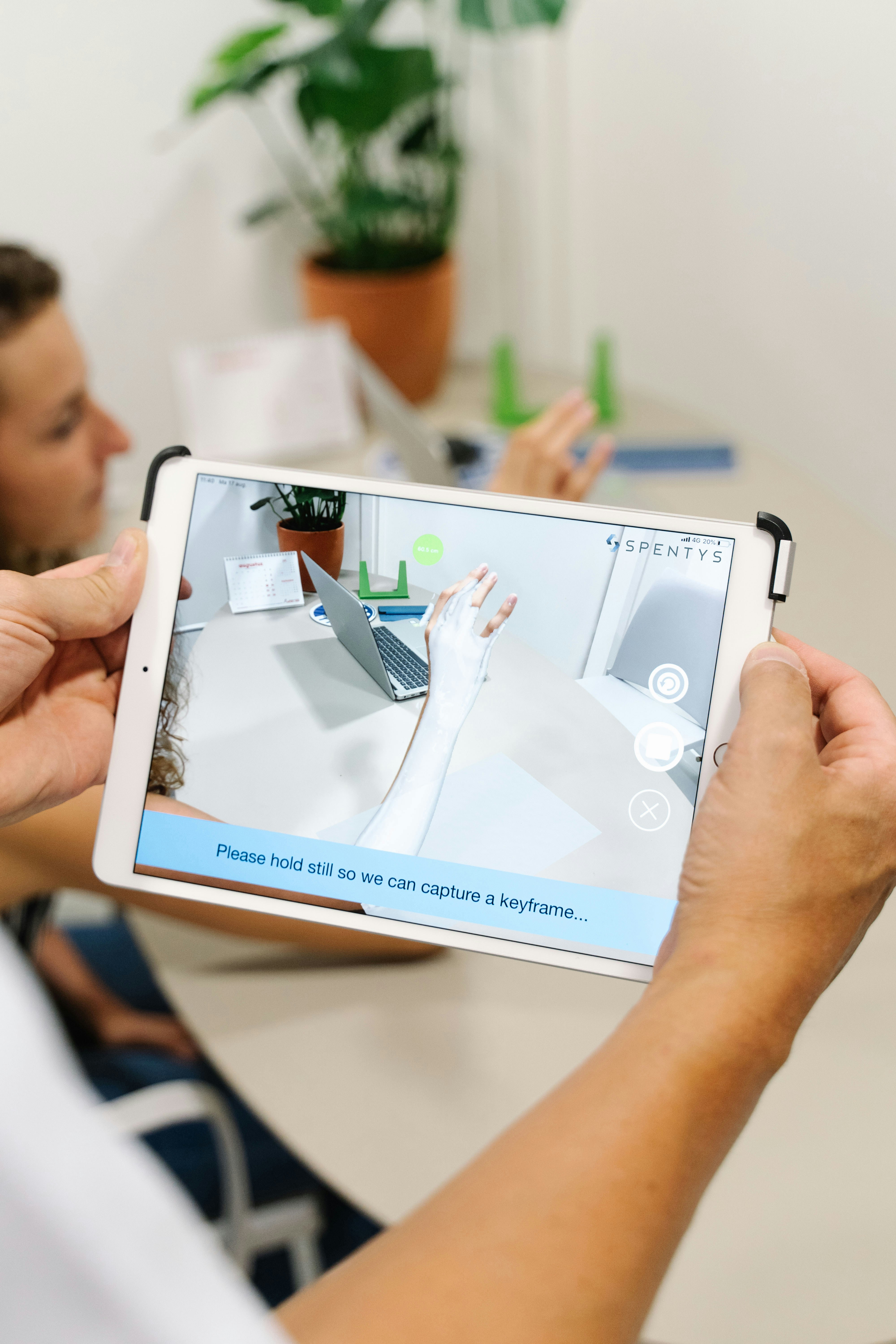
How to Use Augmented Reality in Medical Procedures
- Introduction to Augmented Reality in Healthcare
- Enhancing Precision with Augmented Reality in Surgery
- Training and Education in Medicine Through AR
- Patient Pre-Operative Education with AR
- The Impact of AR on Patient Monitoring and Rehabilitation
- AR's Role in Diagnostics and Treatment Plans
- Challenges and Limitations of AR in Medical Procedures
- Future Prospects of AR in Healthcare
- Conclusion: The Transformative Power of AR in Medicine
Introduction to Augmented Reality in Healthcare
Augmented reality (AR) represents a transformative leap in the manner healthcare professionals engage with technology in clinical practices. Unlike virtual reality, which immerses users in a fully simulated environment, AR overlays digital information onto the real world, enhancing the user’s perception and interaction with their surroundings. This unique capability has made AR an attractive solution for various applications within the healthcare sector.
The evolution of augmented reality in healthcare began in the early 2000s, primarily within military training and simulations. Over the years, advancements in mobile technology and computational power have greatly expanded AR’s accessibility and applicability. Today, AR tools are employed in medical education, surgical planning, and even patient treatment. For example, medical students can utilize AR for 3D visualizations of human anatomy, allowing for a more interactive and comprehensive understanding of complex structures than traditional methods offer.
Furthermore, surgeons can benefit from augmented reality during operations by accessing real-time data and imagery on their surgical tools, minimizing the need to divert their focus from the patient. The incorporation of AR into operating rooms has been shown to enhance precision and efficiency, ultimately leading to better patient outcomes. Another promising application of AR is in rehabilitation, where gamified AR environments assist patients in physiotherapy sessions, making recovery more engaging.
The adoption of augmented reality in healthcare is set to reshape traditional medical practices significantly. By bridging the gap between digital information and the physical world, AR enables healthcare professionals to make informed decisions quicker and more accurately. As technology progresses, the prospects for integrating augmented reality into everyday healthcare operations become increasingly promising, setting the stage for the future of medical practice.

Enhancing Precision with Augmented Reality in Surgery
Augmented Reality (AR) has emerged as a significant technological advancement in the field of surgery. By integrating digital information with the surgeon’s environment, AR enhances the precision and efficacy of surgical procedures. One notable implementation of AR technology is through AR glasses, which provide surgeons with real-time data overlays during operations. These glasses can display critical information such as 3D anatomical models, guiding surgeons through complex procedures.
For instance, during orthopedic surgeries, AR can project the exact location of bones and ligaments, allowing surgeons to visualize their targets without obstructing their views. This technology minimizes the need for invasive exploratory procedures, which can lead to faster recovery times for patients. A surgical team utilizing AR can make more informed decisions by accessing data and analytics at their fingertips. Moreover, AR systems often incorporate pre-operative imaging data, such as MRI scans or CT scans, which are essential in complex cases. Surgeons can visualize the surgical site in a three-dimensional format, facilitating more accurate incisions and reducing the chances of complications.
Another application of AR in surgery is its use in minimally invasive procedures. By enhancing the surgeon’s visualization capabilities, AR supports techniques that require smaller incisions, ultimately benefiting patient recovery and reducing hospital stay durations. The combination of AR with robotic systems further amplifies this effect, as surgeons can leverage AR to guide robotic instruments with unparalleled accuracy.
In summary, the implementation of Augmented Reality in surgical practices not only enhances visualization but also significantly improves the overall surgical outcome. As AR technology continues to evolve, its role in surgery is expected to expand, leading to safer and more efficient procedures.
Training and Education in Medicine Through AR
Augmented Reality (AR) has emerged as a groundbreaking tool in the field of medical training and education, offering unprecedented opportunities for medical professionals to enhance their skills. By integrating digital information with the real world, AR provides an immersive platform where learners can interact with virtual simulations that mimic clinical scenarios. This hands-on practice is particularly beneficial for medical students and professionals, as it allows them to engage in procedures in a controlled and risk-free environment.
The traditional methods of medical training often involve rote memorization and observation, but AR shifts the paradigm by enabling learners to ‘experience’ procedures in realistic settings. With AR technology, trainees can visualize complex anatomical structures and surgical techniques, which reinforces their understanding of critical concepts. For instance, using AR, a surgical trainee can practice suturing techniques on a digital model of human tissue, gaining valuable insights into depth perception and the pressure required to handle delicate instruments.
Moreover, the ability to repeat procedures in AR without the constraints of time or resources allows for better mastery of skills. This technology facilitates immediate feedback, enabling learners to identify areas of improvement rapidly. In a constantly evolving medical landscape, the application of AR in training ensures that practitioners stay current with the latest techniques and technologies. Furthermore, AR can be utilized for remote learning, allowing educators to deliver lessons to students regardless of their physical location. This feature is especially advantageous in situations where hands-on training resources may be scarce or difficult to access.
Overall, the integration of Augmented Reality in medical training and education represents a significant advancement, setting a new standard for the skill development of healthcare professionals. By enhancing the learning experience through interactive simulations, AR prepares medical practitioners to deliver high-quality patient care in the real world.
Patient Pre-Operative Education with AR
In recent years, Augmented Reality (AR) has emerged as a powerful tool in medical education, particularly in the pre-operative phase. Augmented Reality enhances the patient’s understanding of their upcoming procedures by visualizing complex medical information through immersive experiences. This innovative approach allows patients to see a 3D representation of their anatomy and how the surgical procedure will be performed, thereby demystifying the process and reducing anxiety.
One notable application of AR in patient education is through the use of mobile devices, such as smartphones or tablets, which can overlay digital images onto the patient’s real-world environment. For instance, when a patient is about to undergo knee surgery, an AR application can display a 3D model of the knee, allowing them to rotate and explore the surgical site from various angles. This visualization aids in explaining the specific procedure, as the physician can annotate the model, detailing the steps involved in the surgery.
Furthermore, AR can also present potential outcomes and post-operative care in an engaging manner. Patients can visualize their recovery path, including exercises or physical therapy routines, thus enabling them to retain crucial information more effectively. Studies demonstrate that utilizing AR for pre-operative education can lead to increased patient satisfaction, as they feel more informed and engaged in their care decisions.
Incorporating augmented reality into patient pre-operative education not only facilitates a clearer understanding of medical procedures but also fosters a collaborative environment where patients participate actively in their healthcare journey. As technology continues to evolve, the integration of AR in medical settings promises to further transform how patients are educated, ensuring they are well-prepared for their operations and confident in their treatment plans.
The Impact of AR on Patient Monitoring and Rehabilitation
Augmented Reality (AR) technology has emerged as a transformative tool in the domain of patient monitoring and rehabilitation. By overlaying digital information onto the real world, AR assists healthcare providers in engaging patients more effectively during their recovery processes. This innovative approach is proving beneficial in various rehabilitation settings, especially physical therapy, where accurate tracking and adherence to rehabilitation protocols are crucial for recovery outcomes.
One of the primary applications of AR in rehabilitation is the provision of real-time visual feedback to patients. For instance, AR systems can project animations or indicators onto a patient’s body, guiding them through specific movements and exercises. This visual guidance not only enhances the patient’s understanding of the required tasks but also fosters a sense of independence and self-efficacy. By clearly seeing their movements and the designated goals, patients are often more motivated to adhere to prescribed routines, thereby potentially increasing the efficacy of their rehabilitation.
Furthermore, AR technologies can facilitate a more personalized rehabilitation experience. By utilizing data from patient assessments, AR applications can tailor exercise programs to meet individual requirements. These customizations ensure that patients receive the right level of challenge, which can contribute to improved engagement and better outcomes. Moreover, by tracking progress through AR-enabled systems, healthcare professionals can make timely adjustments to treatment plans, ultimately enhancing the overall quality of care.
In addition to visual feedback and personalized exercise regimens, AR can also improve communication between patients and therapists. Virtual demonstrations of exercises can minimize misunderstandings and provide a clear reference point for patients. Enhanced communication is vital, as it establishes a collaborative environment that encourages patients to take an active role in their recovery journey. As AR continues to evolve, its integration into patient monitoring and rehabilitation practices will likely play a pivotal role in advancing therapeutic outcomes.
AR’s Role in Diagnostics and Treatment Plans
Augmented Reality (AR) is revolutionizing the medical landscape, particularly in the areas of diagnostics and the formulation of treatment plans. Through the use of advanced AR systems, healthcare professionals can overlay vital diagnostic imaging data, such as MRIs and CT scans, directly onto the patient’s body or clinical workspace. This innovative approach allows for a more accurate and detailed assessment than traditional methods would permit.
One of the primary benefits of integrating AR into medical diagnostics is its ability to provide a real-time, three-dimensional perspective of complex anatomical structures. This enhances the physician’s ability to visualize and interpret intricate relationships between different tissues and organs. As a result, healthcare providers can make more informed decisions when diagnosing conditions or determining the necessary interventions.
Moreover, AR facilitates the formulation of treatment plans by allowing clinicians to simulate various scenarios before executing procedures. For instance, surgeons can practice and visualize surgical interventions in a controlled, augmented environment, leading to improved precision during actual operations. This practice becomes especially crucial when dealing with intricate procedures where the margin for error is minimal.
Additionally, AR enhances collaboration among healthcare teams by providing a shared visual framework. Multiple specialists can access and interact with the same augmented data, fostering a comprehensive approach to patient care. This collaborative environment ensures that various healthcare professionals can contribute their expertise, resulting in more robust and well-rounded treatment strategies.
In summary, AR not only streamlines the diagnostic process but also promotes a more collaborative and thorough development of treatment plans. By utilizing augmented reality, healthcare providers can significantly improve accuracy in both assessments and strategies, ultimately leading to better patient outcomes.
Challenges and Limitations of AR in Medical Procedures
As healthcare increasingly embraces technological advancements, augmented reality (AR) emerges as a promising tool for enhancing medical procedures. However, there are significant challenges and limitations that hinder its widespread adoption in medical practices. One of the primary concerns is the cost associated with implementing AR systems. The initial investment for AR hardware and software can be substantial, often placing a financial burden on healthcare institutions, particularly those with constrained budgets. Additionally, the continuous maintenance and upgrade of AR technologies can lead to ongoing expenses that further complicate budgetary considerations.
Training is another critical barrier to the integration of AR in healthcare settings. Medical professionals must not only master their primary skills but also learn to operate AR systems effectively. This requires time, resources, and a commitment to ongoing education, which can be challenging within the fast-paced environment of healthcare. The necessity for specialized training may lead to resistance among healthcare providers who are already overwhelmed with their existing responsibilities. Moreover, the steep learning curve associated with AR technology could discourage some professionals from fully embracing its potential.
Resistance from healthcare providers presents yet another challenge to the broader adoption of AR technologies. Many practitioners may be skeptical about the effectiveness of AR tools or hesitant to alter their established practices. This skepticism can stem from concerns about the reliability of AR applications in critical medical contexts, impacting the willingness of providers to incorporate such innovations into their workflows. The potential for distractions caused by AR interfaces during procedures further exacerbates this skepticism, raising questions about patient safety and the efficacy of surgical teams’ decision-making.
In light of these challenges, it is essential for stakeholders to address these barriers systematically to optimize the integration of augmented reality in medical procedures. By focusing on reducing costs, enhancing training programs, and fostering acceptance among healthcare providers, the potential of AR technology in medicine can be fully realized.
Future Prospects of AR in Healthcare
The future of augmented reality (AR) in healthcare holds tremendous potential, as advancements in technology continue to evolve and integrate more deeply into medical practices. Experts foresee that AR will play a crucial role in transforming the way healthcare professionals train, diagnose, and treat patients. One significant area of development is the enhancement of surgical procedures through AR. Imagine surgeons wearing AR glasses that overlay critical information, such as a patient’s anatomy, live data, and imaging results directly onto their field of view. This integration could lead to increased precision during operations and improved patient outcomes.
Moreover, the use of AR for educational purposes is also expected to expand. Medical students and professionals can leverage immersive simulations to practice skills in a risk-free environment. By utilizing AR, learners can navigate complex anatomical structures and engage in realistic scenarios that enhance their understanding and confidence before encountering real-life situations.
Additionally, the ability of AR to facilitate remote consultations is gaining traction. Healthcare providers, regardless of geographical constraints, can utilize AR to connect with specialists across the globe. This real-time collaboration may lead to more informed decision-making and timely interventions for patients, thus improving overall care quality.
As AR technology continues to advance, its applications in healthcare will become more sophisticated. The possibilities of integrating artificial intelligence with AR could enable predictive analytics, where patient data could optimize treatment plans in real-time. Such synergies may revolutionize patient care and management.
In summation, the landscape of healthcare is likely to be significantly reshaped by the ongoing development of augmented reality. With expert insights indicating a surge in AR applications, healthcare providers and patients alike can look forward to a more interactive, engaging, and effective healthcare experience in the years to come.
Conclusion: The Transformative Power of AR in Medicine
Throughout this exploration of augmented reality (AR) in the medical field, it has become evident that its potential extends far beyond mere visualization. AR technology is revolutionizing not only how medical procedures are performed but also how healthcare practitioners are trained and patients are treated. From providing surgeons with critical real-time data during operations to enhancing patient engagement through interactive treatment plans, the incorporation of AR has begun to transform the way medical professionals interact with their work environment.
The applications of augmented reality are vast and varied, encompassing areas such as surgical simulations, remote consultations, and educational programs. By enabling a three-dimensional perspective, AR allows for a better understanding of complex anatomical structures, which is crucial for precise surgical interventions. Furthermore, the integration of AR in medical education facilitates immersive learning experiences that equip future healthcare providers with the necessary skills to navigate the intricacies of patient care.
However, the successful implementation and optimization of AR technology within the healthcare sector require continuous innovation and adaptation. As medical challenges evolve, so too must the tools and technologies employed to address them. Ensuring that augmented reality solutions are tailored to meet specific medical needs will be essential for maximizing their efficacy and enhancing healthcare delivery. The prospect of AR in medicine is not merely a passing trend; it represents a significant step forward in making healthcare more effective, accessible, and patient-centered.
In conclusion, augmented reality holds transformative power in medicine, with its promise to reshape surgical practices, improve training methodologies, and elevate patient experiences. Embracing this technology will be critical as stakeholders seek to harness the full potential of AR, paving the way for significant breakthroughs in healthcare outcomes.


