

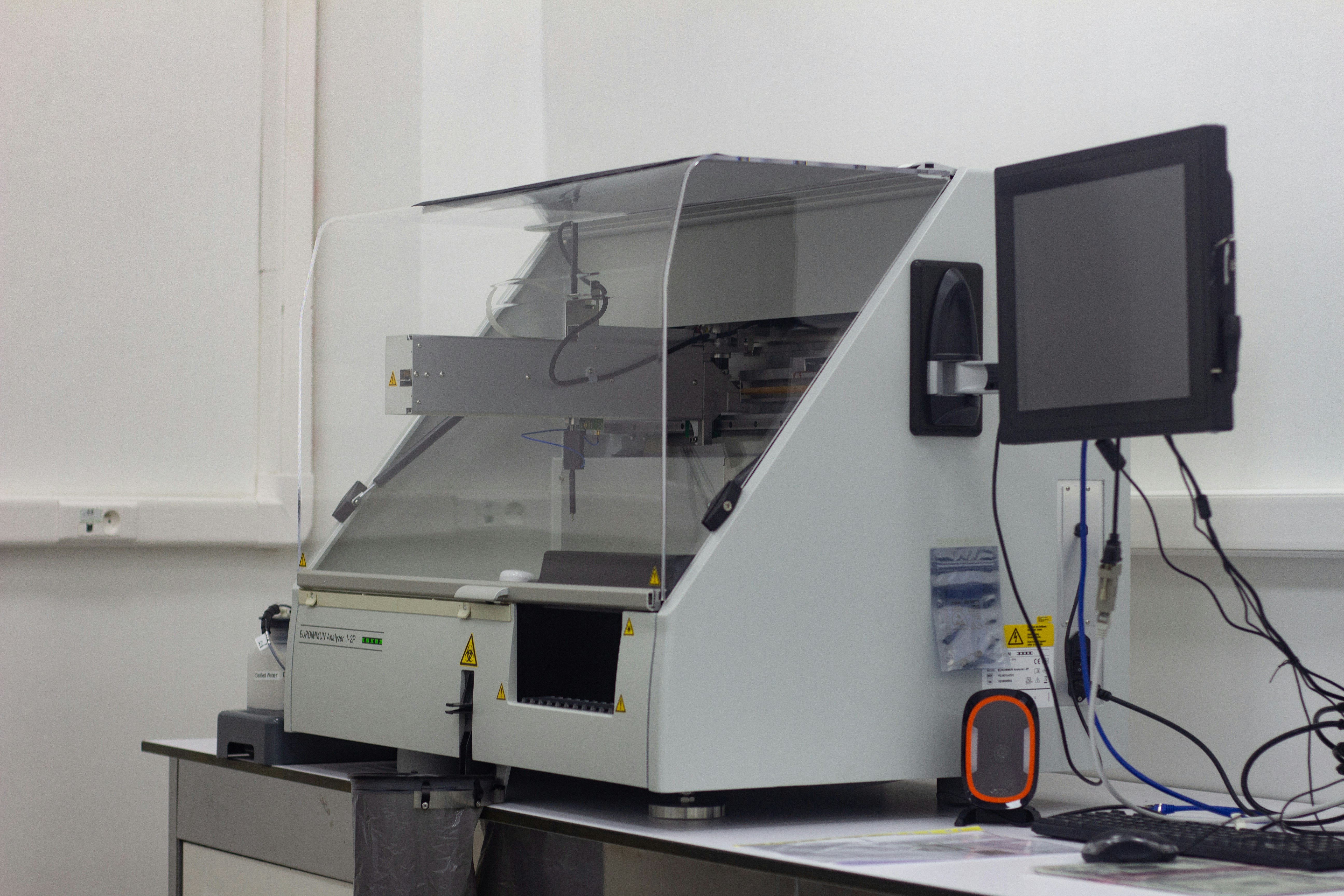
AI and Bio-Instruments: A New Era of Connectivity
- Introduction to Connected Bio-Instruments
- The Evolution of Artificial Intelligence in Healthcare
- Current Applications of AI in Bio-Instruments
- Future Innovations in AI-Enabled Bio-Instruments
- Challenges in Implementing AI in Bio-Instruments
- The Role of Data in AI-Enhanced Bio-Instruments
- Ethical Considerations in AI and Health Technology
- Case Studies of Successful AI Integration in Bio-Instruments
- Conclusion and Future Outlook
Introduction to Connected Bio-Instruments
Connected bio-instruments represent a transformative leap in the intersection of technology and healthcare. These devices, often integrated into the Internet of Things (IoT), facilitate real-time monitoring and data transmission regarding an individual’s health metrics. Examples of such instruments include wearable devices like smartwatches, health monitoring patches, and even smart glucose meters. Each of these devices captures vital physiological data consistently and continuously, empowering users to take charge of their health.
Currently, connected bio-instruments have diverse applications in both healthcare and fitness. In clinical settings, they are pivotal in chronic disease management—patients with diabetes, for instance, benefit from continuous glucose monitoring systems that can alert them to fluctuations in their blood sugar levels. In fitness, these instruments enable users to track their physical activity, heart rates, and sleep patterns, providing invaluable feedback to help them optimize their workouts and overall well-being.
The functioning of connected bio-instruments hinges on advanced sensors, microprocessors, and wireless communication technology. Sensors are capable of detecting various biological signals, which are then processed and transmitted via secure networks to applications or cloud services. This not only enables the storage and long-term analysis of health data but also facilitates immediate insights through user interfaces that allow for personalized health management. Furthermore, the aggregation of this data potentially sets the stage for new approaches to preventive health and personalized medicine.
The integration of Artificial Intelligence (AI) into connected bio-instruments is poised to enhance their capabilities even further, improving predictive analytics and enabling more sophisticated health insights. As we examine the future of AI in this space, it is crucial to understand the foundational elements and current functionalities of connected bio-instruments.
The Evolution of Artificial Intelligence in Healthcare
Artificial intelligence (AI) has undergone significant evolution within the healthcare sector, influencing various aspects of diagnostics, treatment, and patient care. In the early stages, AI systems mainly functioned through rule-based systems and expert systems that relied on predefined rules and human knowledge. These systems allowed for the automation of certain tasks, yet often lacked the adaptive capabilities needed for dynamic healthcare environments.
As machine learning (ML) and deep learning technologies emerged, the landscape of AI in healthcare began to change dramatically. With the ability to process vast amounts of data and recognize complex patterns, these technologies introduced a new dimension for diagnostics, enabling the creation of predictive algorithms that improve patient outcomes. A notable milestone was the development of AI algorithms capable of analyzing medical imaging, significantly outperforming traditional diagnostic methods in identifying conditions such as cancer from X-rays and MRIs.
Despite these advancements, the integration of AI into healthcare was not without challenges. Concerns regarding data privacy, the black-box nature of some AI systems, and regulatory hurdles presented significant obstacles to widespread adoption. However, ongoing advancements in explainable AI (XAI) have sought to address these issues by providing transparency in AI decision-making processes, thus improving trust among healthcare professionals.
The incorporation of AI into connected bio-instruments marks a pivotal shift in how healthcare technologies are utilized. These devices, equipped with AI algorithms, can monitor patient health metrics in real-time, analyze data trends, and alert healthcare providers to anomalies, thus facilitating timely interventions. As the capabilities of AI continue to expand, the future holds great promise for revolutionizing patient care and enabling personalized treatment pathways, positioning connected bio-instruments as key components of a more intelligent healthcare ecosystem.
Current Applications of AI in Bio-Instruments
Artificial Intelligence (AI) has emerged as a vital technology in the latest generation of connected bio-instruments, significantly enhancing their functionality and effectiveness. One prominent application of AI is in wearable health devices. These devices, which include smartwatches and fitness trackers, leverage AI algorithms to analyze real-time health data such as heart rate, blood oxygen levels, and physical activity patterns. By analyzing this data, AI can provide personalized health insights and predictive alerts, allowing users to take proactive steps for their well-being.
Another essential application of AI is in diagnostic tools. AI-driven algorithms can sift through vast amounts of medical data to assist healthcare professionals in diagnosing conditions more accurately and rapidly. For instance, AI models can analyze medical images, such as X-rays and MRIs, to identify anomalies that may not be easily detected by the human eye. This application not only enhances the precision of diagnostics but also facilitates earlier intervention, potentially improving patient outcomes.
Remote monitoring systems have also significantly benefited from AI integration. These systems, often used in telemedicine, enable healthcare providers to continuously monitor patients’ vitals without their physical presence. AI algorithms can analyze data received from bio-instruments, identifying patterns and alerting healthcare providers to any concerning trends or sudden changes in a patient’s condition. This capability is particularly crucial for patients with chronic illnesses who require consistent monitoring and immediate responsiveness to health fluctuations.
In summary, AI applications in connected bio-instruments encompass a wide range of functionalities, from enhancing personal health tracking via wearables to revolutionizing diagnostics and patient monitoring. As AI technology continues to advance, its role in bio-instruments is expected to grow, further improving healthcare delivery and patient engagement.
Future Innovations in AI-Enabled Bio-Instruments
The ongoing evolution of artificial intelligence (AI) and its application in bio-instruments is poised to usher in a new era of health monitoring and diagnosis. As technology advances, the integration of AI into bio-instruments will likely yield several transformative developments in functionality and efficacy.
One of the most significant expected advancements is the enhancement of predictive analytics capabilities. AI algorithms will become increasingly adept at analyzing vast datasets generated through bio-instruments, such as wearable health monitors and diagnostic tools. This will allow for more accurate predictions of potential health issues based on individual health trends, lifestyle choices, and genetic predispositions. For instance, these advanced systems could forecast the onset of chronic conditions long before symptoms manifest, enabling proactive healthcare measures.
Moreover, the potential for real-time data interpretation is another exciting prospect. Future bio-instrument designs, augmented with AI technology, may allow for continuous health surveillance. This means that patients could benefit from instant feedback regarding their vital signs, facilitating immediate action if anomalies are detected. Such enhancements would not only empower patients with actionable health insights but also assist clinicians in making more informed decisions.
AI-powered bio-instruments may also feature improved personalization capabilities. By leveraging machine learning algorithms, these devices could adapt their functionalities to meet the unique needs of individual users. For example, a bio-instrument could tailor its feedback and alerts based on user behavior and preferences, thereby enhancing the user experience and encouraging consistent health monitoring.
As these advancements unfold, it is crucial to prioritize data security and user privacy in AI integrations. Future developments must not only focus on innovation but also on maintaining the integrity and confidentiality of personal health information. By balancing these aspects, the collaborative future of AI and bio-instruments could significantly transform healthcare landscapes.
Challenges in Implementing AI in Bio-Instruments
As the integration of artificial intelligence (AI) into bio-instruments continues to evolve, several significant challenges must be addressed to ensure successful implementation. These challenges primarily encompass technical limitations, data privacy concerns, and regulatory hurdles.
One of the foremost technical limitations lies in the complexity and variability of biological data. Bio-instruments often collect vast amounts of data that can be highly unstructured and noisy. Developing AI models that can accurately process and interpret this data requires sophisticated algorithms and substantial computational resources. Moreover, ensuring that these models are reliable and can operate in real-time presents an additional layer of complexity. The need for continual updates and retraining of AI models can also impose challenges in maintenance and operational costs.
Data privacy concerns are equally critical when it comes to the deployment of AI in bio-instruments. The sensitive nature of biological data necessitates strict adherence to privacy regulations, such as the Health Insurance Portability and Accountability Act (HIPAA) in the United States. Organizations must ensure that any data collected and analyzed by AI systems are securely stored and transmitted while limiting access to authorized personnel only. Failure to comply with such regulations can not only lead to legal consequences but can also erode public trust in the technologies being developed.
Additionally, navigating the regulatory landscape poses another significant challenge. Bio-instruments that incorporate AI must often meet rigorous standards set by health authorities before they can be deemed safe and effective for public use. This process can be lengthy and complicated, requiring extensive testing and validation. The evolving nature of AI technology can further complicate these regulatory processes, as regulators may struggle to keep pace with new developments.
The Role of Data in AI-Enhanced Bio-Instruments
In the evolving landscape of artificial intelligence (AI), the importance of data in enabling enhanced capabilities for connected bio-instruments cannot be overstated. These advanced instruments rely heavily on accurate and comprehensive data collection to function optimally. They utilize sensors and software algorithms to collect biometric, environmental, and user data, which is pivotal in analyzing health conditions and personalizing medical responses. By leveraging vast amounts of data, AI algorithms can identify patterns, predict outcomes, and improve the efficacy of these instruments.
The process of data analysis plays a critical role in the domain of AI-enhanced bio-instruments. Sophisticated machine learning techniques are employed to interpret the data collected from various biological sources. This analysis assists healthcare professionals in making informed decisions based on empirical evidence rather than intuition. Furthermore, it allows for the monitoring of patient progress over time, ensuring timely interventions and adjustments to treatment plans as necessary.
Data integrity and security are paramount in the realm of connected bio-instruments. Given the sensitive nature of health-related information, ensuring data accuracy and protecting against unauthorized access are vital. Robust encryption methods and compliance with regulations such as HIPAA are essential practices to safeguard the data integrity and ensure the privacy of users. Therefore, as we move forward, the relationship between data and AI within bio-instruments must be managed with a focus on ethical considerations and accountability. This ensures that AI technologies can efficiently enhance the reliability and performance of connected bio-instruments while maintaining user trust.
Ethical Considerations in AI and Health Technology
The integration of artificial intelligence in connected bio-instruments presents a series of ethical dilemmas that merit thorough examination. One of the primary concerns revolves around the issue of consent. Patients often entrust their health data to medical devices, but the complexity of AI systems may obfuscate how this data is utilized. It is imperative that healthcare providers ensure that consent is informed, encompassing a detailed explanation of how AI algorithms analyze personal health information and the potential implications thereof.
Another significant ethical consideration is algorithmic bias. AI systems learn from historical data, which can inadvertently embed existing biases into their functioning. For instance, if training data predominantly features certain demographics, the AI may exhibit skewed results that adversely affect underrepresented groups. The ramifications of such biases could extend from misdiagnosis to inappropriate treatment recommendations, thereby raising fundamental questions about equity and fairness in healthcare.
Additionally, the need for transparency in AI decision-making processes cannot be overstated. As AI becomes more prevalent in connected bio-instruments, understanding the rationale behind decisions made by these algorithms becomes critical. Stakeholders—patients, medical professionals, and regulatory bodies—must have access to insights about how AI systems arrive at certain conclusions. This transparency fosters accountability and trust, which are essential for the effective adoption of AI in healthcare settings.
In light of these ethical considerations, it is essential for manufacturers and healthcare providers to prioritize ethical guidelines and best practices. By addressing issues such as consent, bias, and transparency proactively, the healthcare industry can harness the potential of AI while safeguarding patient rights and wellbeing.
Case Studies of Successful AI Integration in Bio-Instruments
As artificial intelligence (AI) continues to advance, numerous companies have begun to successfully integrate this transformative technology into their bio-instruments, leading to remarkable innovations and improved healthcare outcomes. This section explores several notable case studies that highlight the efficacy of AI in enhancing the functionality and accuracy of bio-instruments.
One significant example is the collaboration between IBM Watson Health and medical device manufacturers to develop AI-enhanced diagnostic tools. These bio-instruments utilize machine learning algorithms to analyze vast datasets, supporting healthcare professionals in making rapid and accurate diagnoses. Feedback from clinicians indicates that the incorporation of AI significantly reduces the time required for diagnosis while increasing diagnostic precision, thereby improving patient outcomes.
Another compelling case is the integration of AI in wearable health monitoring devices, such as those produced by Apple and Fitbit. These devices employ advanced algorithms to interpret real-time data from users’ physiological indicators, including heart rate, sleep patterns, and activity levels. Users have reported a higher level of engagement with their health, as the AI features provide personalized insights and warnings about potential health issues. This proactive approach fosters better health management and encourages users to seek timely medical attention when necessary.
A particularly innovative application is seen in the field of diabetes management through AI-powered continuous glucose monitors (CGMs). Companies like Dexcom have developed CGMs that use AI to predict blood sugar fluctuations and provide alerts to patients. User testimonials reveal that this technology improves their ability to manage diabetes more effectively, reducing the risk of complications.
These case studies illustrate the transformative potential of AI in bio-instruments, underscoring the importance of innovation in healthcare. As these technologies continue to evolve, the integration of AI is poised to redefine patient care standards, enhancing both diagnostic and monitoring capabilities for medical professionals and patients alike.
Conclusion and Future Outlook
As we reflect on the current landscape of artificial intelligence in connected bio-instruments, it is evident that the synergy between advanced algorithms and healthcare technology is paving the way for remarkable advancements. These innovations not only enhance the accuracy of diagnostics and personalized treatment plans but also improve overall patient experience and engagement. With AI-driven analytics, connected bio-instruments are transforming vast amounts of health data into actionable insights, which can significantly influence healthcare outcomes.
Looking forward, the future of connected bio-instruments empowered by artificial intelligence appears promising. The integration of machine learning and real-time data processing will foster even greater accuracy and efficiency in monitoring physiological conditions. As the industry continues to evolve, we can anticipate the emergence of even more sophisticated tools that harness the power of AI to facilitate preventive care, enabling healthcare providers to intervene before issues escalate into more serious health concerns.
Furthermore, as regulatory frameworks evolve, it will be imperative for stakeholders — including manufacturers, healthcare providers, and policymakers — to ensure that such technologies are implemented ethically and responsibly. Collaboration across these sectors will be crucial in addressing issues related to data privacy and security, ultimately aiming for a future where connected bio-instruments can be trusted and widely adopted.
In conclusion, the ongoing developments in artificial intelligence within the realm of connected bio-instruments highlight significant potential not only for enhancing medical practices but also for revolutionizing patient care as a whole. By staying informed and engaged, stakeholders in the healthcare industry can contribute to a future characterized by intelligent health monitoring solutions that promote well-being and a higher quality of life for all.


